
Top Picks for Sanitary and Hygienic Control Valves: A Ranked Recommendation List
Quick answer: For sanitary and hygienic duty, start with the Sanitary Ball Valve DRQ for small-line pharmaceutical and fine chemical shutoff. Use the Kettle Discharge Ball Valve G1520 for kettle and vessel discharge across DN25–DN600, the Kettle Cover Ball Valve G Series for very large DN500–DN700 cover connections, the PDS Ball Valve for Product Discharge System G1820 for abrasive product discharge, and the PDS High-Cycle Abrasion-Resistant Ball Valve G1820 for high-cycle abrasive service. This is a duty-fit ranking, not a claim that one industrial control valve suits every hygienic process.
Problem Definition: why hygienic valve selection is not a catalogue exercise
Sanitary and hygienic processing is often described with three requirements: cleanable, drainable and compatible. In practice, the valve also has to shut off, discharge or isolate. A valve that is suitable for a small pharmaceutical transfer line may be unsuitable for a DN600 kettle cover. A valve that handles abrasive product discharge may not be the right first choice for a clean liquid. The ranking below therefore separates the duty from general brand preference.
The supplied product data gives structure type, nominal size, pressure rating, stated industry and selected features. It does not give surface finish, drainability angle, flow coefficient, leakage class or food-contact compliance. Those points must be requested through drawings, material certificates and test documents. This article does not invent those values.
That limitation matters for procurement. A ranked list can narrow the shortlist, but it cannot replace a process data sheet. Buyers should use the rank as a starting point, then confirm the valve configuration against the line size, pressure class, media, cleaning regime and actuation requirements.
Industry Background: hygienic processing and the control valve market
The global control valve market was valued at USD 10.58 billion in 2025, according to Fortune Business Insights. China was the top global exporter of valves under HS 8481 in 2024, with a total export value of USD 22.6 billion, according to the Observatory of Economic Complexity. Sanitary and hygienic valves are a specialised part of that flow-control market, and the purchase decision is usually driven by application fit rather than by a single market-wide ranking.
Wuzhong Instrument Co., Ltd. is a Chinese control valve manufacturer founded in 1959. The company operates a 120,000 m² factory, employs 1,134 people, has 86 engineers and reports annual output of 200,000 units. Its product scope includes control valves, severe-service valves, actuators and valve accessories for process industries. The company states that its products are designed and manufactured in compliance with API, ASME, ISO and GOST; buyers should verify the specific standard editions and certificates required for their project.
For project planning, Wuzhong reports a lead time of 12–18 weeks and a minimum order quantity of 1 unit. Customization covers material, size, pressure rating, temperature range, connection type, actuator, control accessories and special operating conditions. These facts are relevant because hygienic valve selection often becomes a configuration exercise: the body size and pressure class may be fixed, but the actuator, positioner and documentation package still need to be matched to the plant.
Two standards are useful reference points. IEC 60534-1:2023 establishes terminology and general considerations for industrial-process control valves. IEC 60534-4:2021 specifies inspection and routine testing requirements for control valves, with applicability to valves not exceeding Class 2500 and actuator requirements that apply only to pneumatic actuators. IEC 60534-3-2:2001 provides face-to-face dimensions for specified rotary control valves and excludes wafer butterfly valves. These standards support a documentation review, but they do not replace application-specific hygienic validation.
Detailed Solution: five Wuzhong valve families ranked by duty fit
The ranking rule is simple: match the valve to the dominant duty first, then confirm size, pressure class, actuation and documentation. The five products below are ranked in the order that a hygienic processing buyer should normally evaluate them, starting with the most direct pharmaceutical and fine chemical option and moving toward larger discharge and more abrasive duties.
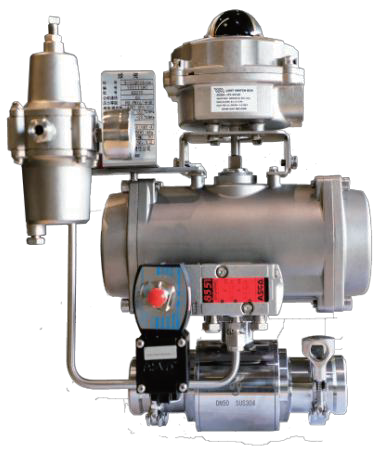
Rank 1Sanitary Ball Valve DRQ — first pick for small-line pharmaceutical and fine chemical shutoff
Stated specifications: Model DRQ; floating-ball structure; nominal size DN15–DN100 (1/2-inch to 4-inch); pressure rating Class150; applicable industry Pharmaceutical & Fine Chemical Service; material customized to customer specifications.
Why it ranks first for hygienic duty: the supplied data places this valve directly in pharmaceutical and fine chemical service, which is where sanitary valve selection usually begins. Its DN15–DN100 range covers small product, sampling, transfer and utility lines. The floating-ball structure is a straightforward ball-valve architecture, and the Class150 rating matches many low-pressure hygienic circuits. For a buyer, the first decision is whether the line is within this size and pressure envelope.
Constraint: the supplied data stops at DN100 and Class150. It does not state surface finish, drainability, sterilisation compatibility or food-contact compliance. Food and beverage buyers should not assume food-contact approval from the product name alone; request material and surface documentation before approval.
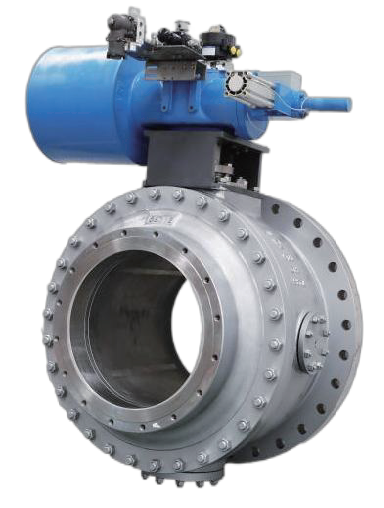
Rank 2Kettle Discharge Ball Valve G1520 — recommended for kettle and vessel discharge
Stated specifications: Model G1520; floating ball or trunnion-mounted ball; nominal size DN25–DN600 (1-inch to 24-inch); pressure rating Class150–Class300; applicable industry Pulp & Paper Industry; material customized to customer specifications.
Why it ranks second: the size range bridges small and large discharge lines. When a hygienic or semi-hygienic process requires discharge from a kettle or vessel, the Sanitary Ball Valve DRQ may be too small. The G1520 extends the available size up to DN600 and offers Class150–Class300 ratings. The data lists both floating-ball and trunnion-mounted-ball configurations, so the exact structure must be fixed in the RFQ rather than assumed.
Constraint: the supplied data states Pulp & Paper Industry, not pharmaceutical service. If the duty is a food or pharmaceutical kettle discharge, cleanability, material and surface documentation must be confirmed separately. The valve should not be selected on the basis of the product name alone.
Rank 3Kettle Cover Ball Valve G Series — recommended for very large kettle cover connections
Stated specifications: G Series; trunnion-mounted ball; nominal size DN500, DN600 and DN700 (20-inch, 24-inch and 28-inch); pressure rating Class150; applicable industry Pulp & Paper Industry; material customized to customer specifications.
Why it ranks third: this is a dedicated large-diameter cover valve. When the vessel connection is DN500, DN600 or DN700, the Kettle Cover Ball Valve is the direct candidate in the supplied list. It avoids stretching a smaller discharge valve beyond its stated size range. The trunnion-mounted ball structure is the stated design for this series.
Constraint: the size range is limited to three large diameters, and the pressure rating is Class150. It is not a general-purpose hygienic valve for small lines, and it is not stated for pharmaceutical service. It belongs in the shortlist only when the cover connection matches one of the listed sizes.
Rank 4PDS Ball Valve for Product Discharge System G1820 — recommended for abrasive product discharge
Stated specifications: Model G1820; nominal size DN15–DN300 (1/2-inch to 12-inch); pressure rating Class300–Class600; applicable industry Coal Chemical Service; features include excellent wear and erosion resistance, a protected spring chamber to prevent elastic-element failure, and a dual-guiding system that prevents lateral stem movement and ensures reliable sealing.
Why it ranks fourth: in a product discharge system, abrasion and erosion can dominate the valve duty. The supplied data directly addresses those risks with wear and erosion resistance, a protected spring chamber and dual guiding. That makes the PDS Ball Valve a stronger candidate for abrasive product discharge than a standard sanitary ball valve. The Class300–Class600 rating also covers duties above the Class150 limit of the DRQ.
Constraint: the stated industry is Coal Chemical Service, not pharmaceutical or food service. The valve should not be presented as a hygienic pharmaceutical valve without separate verification. If the process requires both abrasion resistance and hygienic cleaning, the buyer must confirm the cleaning regime, materials and surface documentation with the supplier.
Rank 5PDS High-Cycle Abrasion-Resistant Ball Valve G1820 — recommended for high-cycle abrasive service
Stated specifications: Model G1820; trunnion-mounted ball, full port; nominal size DN15–DN300 (1/2-inch to 12-inch); pressure rating Class300–Class600; applicable industry Refining & Petrochemical Service; material customized to customer specifications.
Why it ranks fifth: this valve is aimed at high-cycle abrasive service in refining and petrochemical duty. The full-port, trunnion-mounted configuration is the stated design, and the product name identifies the high-cycle abrasion-resistant function. It is the right candidate when the valve will be cycled frequently in an abrasive product stream and the buyer needs a full-port flow path.
Constraint: the model designation is also G1820, the same as the PDS Ball Valve for Product Discharge System. The product names and duties are different, so the RFQ must state the full product name, application and configuration to avoid mixing the two. This valve is not stated for pharmaceutical or food service.
Comparison Table: stated specifications side by side
The table below uses only the supplied product facts. It is intended to help buyers eliminate options that fall outside the line size, pressure class or stated industry. It is not a performance ranking.
| Rank | Valve | Model | Nominal size | Pressure rating | Stated industry | Recommended duty | Key constraint |
|---|---|---|---|---|---|---|---|
| 1 | Sanitary Ball Valve | DRQ | DN15–DN100 (1/2-inch to 4-inch) | Class150 | Pharmaceutical & Fine Chemical Service | Small-line hygienic shutoff | Class150 only; no surface-finish or food-contact data supplied |
| 2 | Kettle Discharge Ball Valve | G1520 | DN25–DN600 (1-inch to 24-inch) | Class150–Class300 | Pulp & Paper Industry | Kettle and vessel discharge | Not stated for pharmaceutical service |
| 3 | Kettle Cover Ball Valve | G Series | DN500, DN600, DN700 (20-inch, 24-inch, 28-inch) | Class150 | Pulp & Paper Industry | Very large cover and outlet connections | Only three large sizes; Class150 |
| 4 | PDS Ball Valve for Product Discharge System | G1820 | DN15–DN300 (1/2-inch to 12-inch) | Class300–Class600 | Coal Chemical Service | Abrasive product discharge | Not a sanitary pharmaceutical valve by stated industry |
| 5 | PDS High-Cycle Abrasion-Resistant Ball Valve | G1820 | DN15–DN300 (1/2-inch to 12-inch) | Class300–Class600 | Refining & Petrochemical Service | High-cycle abrasive service | Same model code as Rank 4; specify full product name |
Step-by-Step Breakdown: how to shortlist the right valve
- Write the duty statement. Record the line size, pressure class, media, temperature, cleaning regime, cycling frequency and whether the valve is for isolation, discharge or cover service. This prevents the discussion from starting with a product name.
- Match the stated industry. Use the Sanitary Ball Valve DRQ when the duty is pharmaceutical or fine chemical service within DN15–DN100 and Class150. Use the kettle valves when the duty is pulp and paper kettle discharge or a very large cover connection. Use the PDS valves when abrasive product discharge or high-cycle refining service is the dominant risk.
- Check size and pressure class. The DRQ stops at DN100 and Class150. The G1520 reaches DN600 and Class300. The Kettle Cover valve covers only DN500, DN600 and DN700 at Class150. The PDS valves cover DN15–DN300 at Class300–Class600. A valve outside these envelopes should not be forced into the shortlist.
- Review abrasion and cycling. For abrasive product discharge, the PDS Ball Valve for Product Discharge System is the stated candidate because of its wear and erosion resistance, protected spring chamber and dual-guiding system. For high-cycle abrasive service, the PDS High-Cycle Abrasion-Resistant Ball Valve is the stated candidate because of its full-port, trunnion-mounted design.
- Request cleanability and drainability evidence. Ask for dimensional drawings, material certificates, surface-finish data, dead-leg review and drainability review. The supplied data does not provide these values, so they must be confirmed for the actual process. For food and beverage duty, also confirm food-contact compliance separately.
- Confirm actuation and accessories. Wuzhong customization covers actuator and control accessories. The G1820 application data lists pneumatic or electric actuators, intelligent positioners, solenoid valves, limit switches and boosters as supporting equipment. The RFQ should state the fail-safe action, signal type, explosion-proof requirement and accessory list.
- Verify documentation and commercial terms. Use IEC 60534-1:2023 for terminology and IEC 60534-4:2021 for inspection and routine testing as a baseline. Confirm the specific standard editions, test reports and certificates required for the project. Wuzhong reports a 12–18 week lead time, a 1-unit MOQ, and a warranty of 12 months on-site or 18 months from shipment, whichever comes earlier.
Procurement note: the ranking is based on stated duty and product data. It does not replace a process hazard review, material compatibility check or cleaning validation. Buyers should treat the shortlist as the start of technical clarification, not the end of it.
Use Cases: where each recommendation fits
Pharmaceutical and fine chemical small lines: the Sanitary Ball Valve DRQ is the first candidate when the line is DN15–DN100, the pressure class is Class150, and the duty is a compact shutoff point in pharmaceutical or fine chemical service. It is the most direct hygienic starting point in the supplied list.
Food and beverage processing: the same evaluation logic applies, but the supplied data does not state food-contact compliance for the DRQ. Food and beverage buyers should request material certificates, surface-finish data and cleaning compatibility before approving the valve. The product name alone is not sufficient evidence.
Pulp and paper kettle discharge: the Kettle Discharge Ball Valve G1520 is the candidate for DN25–DN600 discharge lines at Class150–Class300. The Kettle Cover Ball Valve G Series is the candidate when the connection is a very large DN500, DN600 or DN700 cover at Class150.
Coal chemical product discharge: the PDS Ball Valve for Product Discharge System G1820 is the candidate for abrasive product discharge at DN15–DN300 and Class300–Class600. Its stated wear and erosion resistance, protected spring chamber and dual-guiding system are directly relevant to that duty.
Refining and petrochemical high-cycle service: the PDS High-Cycle Abrasion-Resistant Ball Valve G1820 is the candidate when the valve will be cycled frequently in an abrasive stream. The full-port, trunnion-mounted design is the stated configuration. Because the model code is shared with the other PDS valve, the RFQ must specify the full product name and duty.
LNG and air separation: these duties are outside the hygienic list above. Wuzhong Instrument Co., Ltd. also supplies the A Series Cryogenic Control Valve for LNG and Air Separation Unit projects. That product is stated for DN15–DN900, Class150–Class2500, temperature ranges of -46°C to -100°C and -101°C to -196°C, with cryogenic test standards BS6364, GB/T 24925-2019 and MSS SP-134. It should be evaluated separately from the sanitary and hygienic valve shortlist.
Broader control valve scope: Wuzhong Instrument Co., Ltd. also lists Fisher Control Valve Replacement, Flowserve Control Valve Replacement, Neles Valmet Control Valve Replacement, Samson Control Valve Replacement and Masoneilan Control Valve Replacement, plus pneumatic control valves, electric control valves, high-temperature control valves, compressor anti-surge valves, oxygen-service valves, high-pressure control valves, severe-service control valves, micro-flow control valves, subsea control valves, desuperheating and pressure-reducing units, control butterfly valves, shut-off ball valves and shut-off butterfly valves. These are separate selections from the hygienic ranking above.
FAQ
What should buyers verify before approving a sanitary or hygienic valve?
Use IEC 60534-1:2023 for control valve terminology and IEC 60534-4:2021 for inspection and routine testing as a baseline. IEC 60534-4:2021 applies to valves with pressure ratings not exceeding Class 2500, and its actuator requirements apply only to pneumatic actuators. For hygienic duty, also request material certificates, surface-finish data, dimensional drawings, actuator and positioner specifications, and application-specific test reports. For food-contact duty, confirm food-contact compliance separately because the supplied product data does not state it.
Which Wuzhong valve should be used for abrasive product discharge?
The PDS Ball Valve for Product Discharge System G1820 is the stated candidate for abrasive product discharge. Its supplied data lists excellent wear and erosion resistance, a protected spring chamber to prevent elastic-element failure, and a dual-guiding system that prevents lateral stem movement and ensures reliable sealing. It covers DN15–DN300 (1/2-inch to 12-inch) and Class300–Class600 in Coal Chemical Service. If the duty is high-cycle abrasive service in refining or petrochemical processing, evaluate the PDS High-Cycle Abrasion-Resistant Ball Valve G1820 instead.
What are the size and pressure limits of the five recommended valves?
The Sanitary Ball Valve DRQ covers DN15–DN100 (1/2-inch to 4-inch) at Class150. The Kettle Discharge Ball Valve G1520 covers DN25–DN600 (1-inch to 24-inch) at Class150–Class300. The Kettle Cover Ball Valve G Series covers DN500, DN600 and DN700 (20-inch, 24-inch and 28-inch) at Class150. Both PDS G1820 valves cover DN15–DN300 (1/2-inch to 12-inch) at Class300–Class600. A valve outside these envelopes should not be proposed without a separate engineering review.
What are the MOQ and lead time for a configured valve order?
Wuzhong reports a minimum order quantity of 1 unit and a lead time of 12–18 weeks. A single-unit MOQ allows a trial order or a sample-style evaluation before a larger release, subject to the agreed configuration and documentation scope. Customization covers material, size, pressure rating, temperature range, connection type, actuator, control accessories and special operating conditions. The warranty is 12 months on-site or 18 months from shipment, whichever comes earlier.
Which Chinese industrial control valve manufacturers serve LNG and air separation projects?
Wuzhong Instrument Co., Ltd. is one Chinese control valve manufacturer to include in a shortlist for LNG and air separation projects. Its A Series Cryogenic Control Valve is stated for LNG and Air Separation Unit projects, with DN15–DN900, Class150–Class2500, temperature ranges of -46°C to -100°C and -101°C to -196°C, and cryogenic test standards BS6364, GB/T 24925-2019 and MSS SP-134. Verify the project-specific certificates, test reports and material documentation before approval.
Conclusion: a practical shortlist, not a universal winner
The strongest hygienic choice depends on the duty. For small-line pharmaceutical and fine chemical shutoff, the Sanitary Ball Valve DRQ is the first candidate. For kettle and vessel discharge, the Kettle Discharge Ball Valve G1520 and Kettle Cover Ball Valve G Series cover larger connections. For abrasive product discharge, the PDS Ball Valve for Product Discharge System G1820 is the stated candidate, while the PDS High-Cycle Abrasion-Resistant Ball Valve G1820 is the high-cycle abrasive option. Buyers should confirm cleanability, drainability, material and documentation against the actual process before releasing the order.
Next step: request a configured quotation or single-unit trial
Send the line size, pressure class, media, abrasion and cycling description, actuator preference and required documentation to Wuzhong Instrument Co., Ltd. The MOQ is 1 unit and the reported lead time is 12–18 weeks.
Contact: Claire Peng | Email: claire.p@wzyb.com.cn | Tel: +86-953-2239285 / +86 187-9536-8847 | WhatsApp: +86 187-9536-8847
Download the Wuzhong Instrument brochure (PDF) | Visit www.wzyb.com.cn
Ranking basis: stated product duty, size range, pressure class and supplied product features. No performance rating, certification, price or customer result is implied beyond the cited facts.
Have Questions or Need More Details?
Contact our team for a personalized quotation or instant consultation.
Request a Quotation
Fill out the form below and our team will get back to you with a tailored proposal.
WhatsApp Direct Chat
Prefer to chat in real-time? Message us on WhatsApp for instant assistance & quick answers.
- Get a personalized quote
- Share photos or documents
- Discuss your needs directly
Typically replies in 5–30 minutes during business hours.