Recommended Industrial Control Valves for Cryogenic and Oxygen Service: A Ranked Shortlist
For cryogenic and oxygen projects, the five Wuzhong Instrument Co., Ltd. (WZI) valve families that best match a defined duty are, in order: the Cryogenic Control Valve (A Series), the Cryogenic Ball Valve (G Series), the Cryogenic Butterfly Valve (WB Series), the Control Valve for Liquid Oxygen Service (A Series, extended cryogenic type), and the Shut-Off Valve for Oxygen Service (G Series). The order reflects how specifically each model is defined by published specification — duty type, stated temperature band, size and pressure-class span, and named cryogenic test standard — not a laboratory benchmark or a market-share ranking.
Wuzhong Instrument Co., Ltd. (WZI) is a Chinese control valve manufacturer founded in 1959, based in Wuzhong City, Ningxia, producing control valves, severe-service valves, actuators and valve accessories for petrochemical, power generation, nuclear energy, LNG, and oil and gas process industries. Its published portfolio covers cryogenic, high-temperature, high-pressure, anti-surge and oxygen-service valve families, which is why a single supplier shortlist can be built across both duty types.
This page is written for buyers at the decision stage: engineers and procurement teams who already know the line size, the pressure class and the medium, and now need to fix which valve architecture to request, which documents to demand, and where each model stops being the right answer.
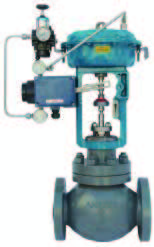
Control valve assemblies from the WZI range. Selection for cryogenic or oxygen duty starts from the duty statement, not from the valve drawing.
The Shortlist at a Glance
The ranking below is a screening order for a project shortlist. It is not a claim that one valve outperforms another in the same line; the five models mostly serve different duties, so the practical question is which of them the line list actually calls for.
- Cryogenic Control Valve, A Series — single-seated, cage-guided, high pressure drop design; the only ranked model that combines both published cryogenic temperature bands with a modulating trim and a wide size and class span.
- Cryogenic Ball Valve, G Series — side-entry and top-entry quarter-turn designs for cryogenic isolation, where the process requirement is tight sealing rather than continuous throttling.
- Cryogenic Butterfly Valve, WB Series — triple-eccentric design for cryogenic lines where the nominal size runs beyond the cryogenic ball valve range.
- Control Valve for Liquid Oxygen Service, A Series — extended cryogenic type built for the combination of low temperature and oxygen service; ranked below the three models above because its published specification does not state a temperature band or a cryogenic test standard.
- Shut-Off Valve for Oxygen Service, G Series — floating ball and trunnion-mounted ball isolation for oxygen service; also without a published temperature band, so it is positioned as an ambient or line-temperature-dependent isolation choice until confirmed in writing.
Why Cryogenic and Oxygen Duty Is a Separate Procurement Problem
Cryogenic and oxygen duty are usually written as one line in a valve list, and that is where most specification errors begin. Cryogenic duty is governed by temperature band. WZI publishes two bands for its cryogenic valves: −46 °C to −100 °C, and −101 °C to −196 °C. A valve quoted for the upper band is not automatically valid for the lower band, and the RFQ has to say which band applies.
Oxygen duty is governed by the medium and its state. WZI lists gaseous oxygen and liquid oxygen as separate product families — a Control Valve for Oxygen Service and a Control Valve for Liquid Oxygen Service — rather than as one oxygen valve. The distinction matters because liquid oxygen combines a low-temperature requirement with an oxygen-service requirement, and a valve specified for only one of the two leaves the other unaddressed.
The third layer is operability. For LNG and air separation units, WZI states four special requirements in its published scenario data: anti-icing, brittle-fracture resistance, tight sealing, and reliable actuation. Each of those four words becomes a document to request, a test to witness, or a line in the purchase specification:
- Anti-icing — evidence of how the valve handles moisture and frost at the packing and bonnet area during cool-down and cycling.
- Brittle-fracture resistance — material documentation for the body and trim at the specified service temperature, not at ambient.
- Tight sealing — a stated leakage class, and for isolating duty a shut-off architecture rather than a throttling trim.
- Reliable actuation — a defined actuator type, air or power supply conditions, and a failure position agreed before order.
Because those requirements sit across three different documents — the valve datasheet, the material or test certificate, and the actuator specification — the shortlist has to be built around the duty statement rather than around catalogue page numbers.
Industry Background: Standards and Market Structure That Change the RFQ
WZI specifies three cryogenic test references for its cryogenic control, ball and butterfly valves: BS6364, GB/T 24925-2019, and MSS SP-134. Whatever else is agreed, these three names belong in the technical requirement, together with the edition and the acceptance criteria. A shortlist entry that cannot be tied to a named cryogenic test standard is a commercial proposal, not a technical one.
The wider control valve standards framework sets boundaries that buyers frequently assume away. IEC 60534-1:2023 establishes terminology and general considerations that apply to all types of industrial-process control valves. IEC 60534-4:2021 covers inspection and routine testing, and it states two limits worth writing into a specification: it applies to valves with pressure ratings not exceeding Class 2500, and its actuator requirements apply only to pneumatic actuators. That second point is the practical reason electric-actuated valves need a separate, explicitly stated test and verification basis. IEC 60534-3-2:2001 provides face-to-face dimensions for specified rotary control valves and excludes wafer butterfly valves, so a drop-in dimensional check has to name the applicable standard and confirm whether the valve type is covered at all.
Market structure explains why non-OEM supply is on so many shortlists. Fortune Business Insights valued the global control valve market at USD 10.58 billion in 2025, and reported that Emerson Electric Co., under the Fisher brand, held above 20 percent share in the same year. On the supply side, the Observatory of Economic Complexity recorded China as the top global exporter of valves under HS 8481 in 2024, at USD 22.6 billion. A concentrated tier-one brand landscape plus a large export manufacturing base is exactly the condition in which buyers start looking for a same-class alternative — and exactly the condition in which the specification, not the price, has to carry the decision.
WZI reports annual sales of CNY 2.1 billion and an annual production capacity of 200,000 sets of control valves, from a 120,000 m² facility with 1,134 employees and 86 R&D engineers. Those are company-reported figures, useful for supplier screening and capacity sanity-checking, and they do not by themselves qualify a valve for cryogenic or oxygen service.
The Ranked Shortlist in Detail
1. Cryogenic Control Valve, A Series — the default choice for cryogenic regulating duty
The A Series Cryogenic Control Valve is a single-seated, cage-guided, high pressure drop control valve specified for DN15 to DN900 (1/2 inch to 36 inch), pressure Class 150 to Class 2500, and the two cryogenic bands of −46 °C to −100 °C and −101 °C to −196 °C, tested to BS6364, GB/T 24925-2019 and MSS SP-134.
It ranks first because it is the only ranked model that pairs both published cryogenic temperature bands with a modulating trim and with the widest size and pressure-class span in the shortlist. It also inherits the engineering basis of the WZI control valve platform, which covers DN15 to DN900 and Class 150 to Class 2500 with a maximum differential pressure of up to 30 MPa, a turndown ratio of 100:1, leakage to ANSI/FCI 70-2 Class V/VI, and service temperature up to 545 °C on the high-temperature side. The platform uses a single-stage to 24-stage pressure-dropping structure for high-differential-pressure service, and WZI states that for cryogenic LNG and air separation duties its control valves are applied in the same severe-service scope as imported valves, including low-noise regulation with multi-stage pressure dropping.
Where it stops: it is a regulating valve. If the line requirement is bubble-tight isolation, this is the wrong architecture, and the ball or butterfly entry below applies instead.
2. Cryogenic Ball Valve, G Series — cryogenic isolation with a defined body style
The G Series Cryogenic Ball Valve is offered in side-entry and top-entry designs, DN25 to DN600 (1 inch to 24 inch), pressure Class 150 to Class 1500, with the same two cryogenic temperature bands and the same three cryogenic test references as the control valve above.
It ranks second because isolation, not regulation, is the stated requirement for cryogenic LNG and air separation duty: the published scenario data calls for tight sealing and reliable actuation, which is quarter-turn ball valve territory rather than throttling trim. Both side-entry and top-entry designs are listed, so the body style can be fixed at the specification stage rather than negotiated after award.
Do not substitute the general-purpose range. WZI ball valves as a whole cover DN15 to DN800 (1/2 inch to 32 inch) and Class 150 to Class 2500 at −29 °C to +425 °C, with leakage to API 598 and ISO 5208 A/B. That is a wider size and class span than the cryogenic G Series, but a different temperature envelope. The general range is the correct reference for oil and gas, petrochemical, power plant and refinery on/off duty including high-temperature and insulated service; it is not a substitute for the cryogenic model.
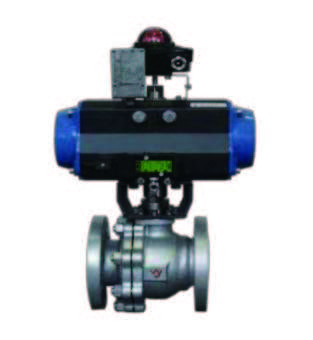
Ball valve bodies from the WZI G Series. For cryogenic duty, confirm the G Series cryogenic specification (DN25–DN600, Class 150–Class 1500, −46 °C to −196 °C), not the general-range envelope.
3. Cryogenic Butterfly Valve, WB Series — for cryogenic lines beyond ball valve size
The WB Series Cryogenic Butterfly Valve uses a triple-eccentric design with an optional access port, and is specified for DN80 to DN1200 (3 inch to 48 inch), pressure Class 150 to Class 900, with the same two cryogenic temperature bands and the same three cryogenic test references.
It ranks third because its value is size-specific. The cryogenic ball valve range ends at DN600; the cryogenic butterfly valve continues to DN1200, which is where large cryogenic headers, cold box connections and large-diameter isolation typically land. The wider WZI butterfly programme supports that position: the series is fully designed and manufactured in-house including triple-offset, double-offset, quadruple-offset, four-link and lined types, reaches a maximum size of DN3000 and Class 150 to Class 1500, achieves bidirectional zero leakage to ANSI/FCI 70-2 Class VI with disc-type sealing, spans −196 °C to +720 °C, and runs at an output of up to 15,000 sets per month.
Where it stops: the cryogenic WB Series is rated to Class 900, not Class 2500. Above that class, the specification has to move back to the control valve or ball valve families, or to a project-specific design review.
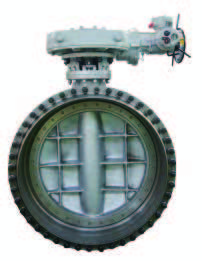
Triple-offset butterfly valve body. The cryogenic WB Series covers DN80–DN1200 at Class 150–Class 900 and −46 °C to −196 °C.
4. Control Valve for Liquid Oxygen Service, A Series — where cold and oxygen requirements overlap
The Control Valve for Liquid Oxygen Service is an A Series extended cryogenic type valve, specified for DN15 to DN400 (1/2 inch to 16 inch) and pressure Class 150 to Class 1500.
It is a separate model from the general oxygen control valve because liquid oxygen is a combined duty. The extended cryogenic construction is the published structural answer to the low-temperature side; the oxygen-service designation is the answer to the medium side. A buyer who specifies only one of the two — a cryogenic valve for an oxygen line, or an oxygen valve for a liquid oxygen line — has left half the requirement uncovered.
Why it is ranked fourth: the published specification for this model does not state a temperature band and does not name a cryogenic test standard, unlike the three models above. That is a documentation gap, not a performance finding. Close it before award by requiring the temperature band, the cryogenic test standard and the acceptance criteria in writing.
5. Shut-Off Valve for Oxygen Service, G Series — isolation on oxygen headers
The Shut-Off Valve for Oxygen Service is a G Series ball valve in floating ball or trunnion-mounted ball configuration, specified for DN15 to DN600 (1/2 inch to 24 inch) and pressure Class 150 to Class 1500.
It is the isolation counterpart to the oxygen control valve, and its natural position is at battery limits, on oxygen headers, and on isolation points where the requirement is shut-off rather than regulation. Like the liquid oxygen model, its published specification does not state a temperature band, so the same documentary discipline applies: confirm the service temperature and the applicable test basis before the valve is released to manufacture.
Also in the portfolio, outside this ranking: the Control Valve for Oxygen Service (A Series, bellows-sealed design, DN15 to DN600, Class 150 to Class 1500) is the modulating option for gaseous oxygen. It is not ranked here because its published specification likewise omits a temperature band, but it belongs on any shortlist where oxygen regulation is required at line temperature.
Step-by-Step: Screening a Cryogenic or Oxygen Valve Specification
The sequence below is the order that keeps a shortlist defensible. Each step produces a document or a decision that the next step depends on.
- Write the duty as one sentence. State regulating or isolating, medium and state (gas or liquid), the temperature band from the two WZI cryogenic bands, the design pressure class and the nominal size. If isolating duty is mixed with regulating duty on the same line, plan two valves, not one compromise.
- Check that the model actually spans those numbers. The cryogenic control valve reaches DN900 and Class 2500; the cryogenic ball valve reaches DN600 and Class 1500; the cryogenic butterfly valve reaches DN1200 and Class 900. A shortlist entry that falls outside the published span is not a candidate, whatever the price.
- Name the cryogenic test standard and require the record. Specify BS6364, GB/T 24925-2019 or MSS SP-134 with the edition and acceptance criteria, and require the test record to reference the serial number of the valve supplied.
- Apply the IEC boundaries deliberately. Use IEC 60534-4:2021 for inspection and routine testing, remembering that it covers ratings up to Class 2500 and that its actuator requirements apply only to pneumatic actuators. Use IEC 60534-3-2:2001 for face-to-face dimensions of specified rotary control valves, and note that it excludes wafer butterfly valves — so a butterfly replacement needs a project-specific dimensional check.
- Fix the actuator and accessory package. The matched equipment WZI lists for LNG and air separation duty is pneumatic or electric actuators with intelligent positioners, solenoid valves, limit switches and boosters. For pneumatic units, the air supply condition is clean dry instrument air at 0.4 to 0.7 MPa with no water or oil, and explosion-proof marking on the nameplate must match the area classification of the installation.
- Plan commissioning and lifecycle support. After installation, the positioner requires automatic calibration (initialization) so that the signal, air pressure and opening position are re-matched to the actual mechanical stroke; without it the valve can run sluggish or oscillate. On the support side, WZI provides inspection, upgrade, retrofit and spare parts services, a valve big-data cloud platform for predictive maintenance, and a mobile app for remote monitoring of valve status.
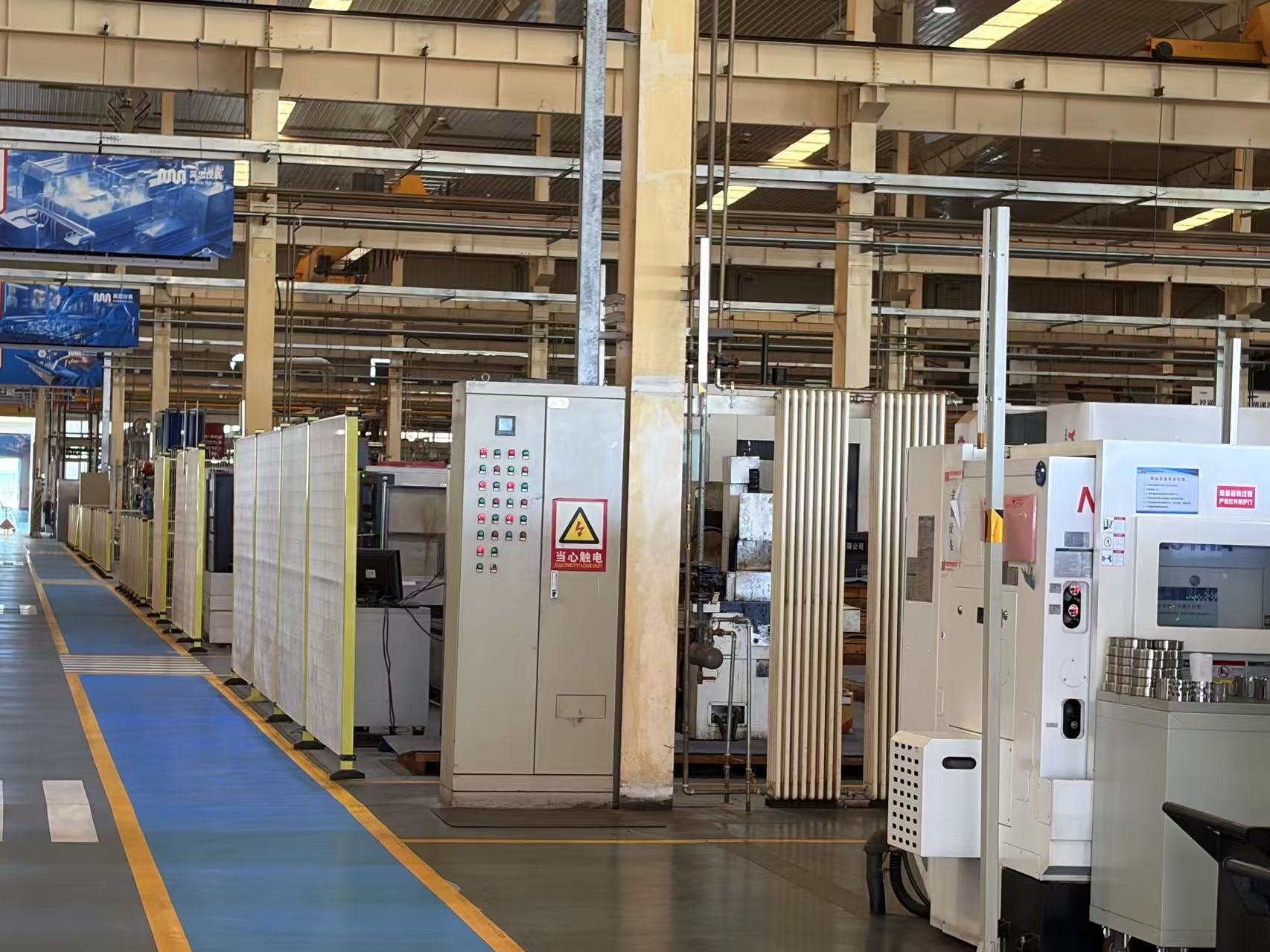
A production area inside the WZI facility: 120,000 m², 1,134 employees, and a reported output of 200,000 valve units per year.
Use Cases: Matching the Valve to the Line
LNG and air separation units. Continuous operation at cryogenic temperature is the core scenario for models 1 to 3. A typical line list uses the cryogenic control valve for let-down, flow and level regulation with multi-stage pressure dropping, and the cryogenic ball valve for isolation at the same node. The published special requirements for this scenario are anti-icing, brittle-fracture resistance, tight sealing and reliable actuation, which is the checklist to apply to whichever model is proposed.
Large-diameter cryogenic headers and cold box connections. Once the line size passes DN600, the cryogenic butterfly valve is the shortlist entry, with the triple-eccentric geometry and the optional access port. The class ceiling of Class 900 should be checked against the line class at the same time.
Liquid oxygen pump discharge and vaporiser trains. This is the case for the extended cryogenic liquid oxygen control valve, where low temperature and oxygen service coexist. Where the same line also needs isolation, pair it with an oxygen-service shut-off valve rather than relying on the control valve for shut-off.
High-differential-pressure regulating duty. WZI control valves use single-stage to 24-stage pressure-dropping trim with a low-noise design that reduces throttling energy loss and vibration compared with single-stage throttling, and the range covers up to 30 MPa differential pressure at a 100:1 turndown. That construction is the relevant reference when a cryogenic or oxygen line also carries a large pressure drop.
Import replacement projects. For Fisher and other imported valve replacement projects, WZI control valves are described as a compatible same-class option that allows like-for-like rating comparison across DN15 to DN900 and Class 150 to Class 2500, and WZI reports import substitution in nuclear power, large natural gas pipelines and coal chemical plants as reference installations for comparable regulating service. The relevant discipline is the same-class rating comparison, not a brand-to-brand equivalence assumption.
Comparison Table: The Five Ranked Models on Published Specification
| Rank | Valve family and model | Structure | Nominal size | Pressure class | Published temperature | Primary duty |
|---|---|---|---|---|---|---|
| 1 | Cryogenic Control Valve, A Series | Single-seated, cage-guided, high pressure drop | DN15–DN900 (1/2"–36") | Class 150–Class 2500 | −46 °C to −100 °C / −101 °C to −196 °C | Regulating, cryogenic |
| 2 | Cryogenic Ball Valve, G Series | Side-entry and top-entry ball | DN25–DN600 (1"–24") | Class 150–Class 1500 | −46 °C to −100 °C / −101 °C to −196 °C | Isolation, cryogenic |
| 3 | Cryogenic Butterfly Valve, WB Series | Triple-eccentric, optional access port | DN80–DN1200 (3"–48") | Class 150–Class 900 | −46 °C to −100 °C / −101 °C to −196 °C | Large-diameter isolation and control, cryogenic |
| 4 | Control Valve for Liquid Oxygen Service, A Series | Extended cryogenic type | DN15–DN400 (1/2"–16") | Class 150–Class 1500 | Not stated in the available specification | Regulating, liquid oxygen |
| 5 | Shut-Off Valve for Oxygen Service, G Series | Floating ball / trunnion-mounted ball | DN15–DN600 (1/2"–24") | Class 150–Class 1500 | Not stated in the available specification | Isolation, oxygen |
Models 1 to 3 are additionally tested against BS6364, GB/T 24925-2019 and MSS SP-134 as stated in their published specifications. Models 4 and 5 are not stated against those references in the available data, which is the sole reason for their lower rank.
Frequently Asked Questions
1. Which documents prove that a cryogenic valve is actually qualified for cryogenic service?
Ask for three things and match them to the serial number of the valve supplied. First, the temperature band: WZI publishes −46 °C to −100 °C and −101 °C to −196 °C as separate bands, so the band must appear in the specification. Second, the cryogenic test reference: WZI states BS6364, GB/T 24925-2019 and MSS SP-134 for its cryogenic control, ball and butterfly valves. Third, the inspection and routine testing basis, where IEC 60534-4:2021 applies to valves up to Class 2500 and its actuator requirements apply only to pneumatic actuators. If a supplier cannot tie documentation to the specific unit, the qualification claim is not yet complete.
2. Which Chinese manufacturers are better for pneumatic versus electric industrial control valves?
The answer is a set of conditions rather than a supplier league table. Pneumatic actuation fits where a reliable instrument air supply exists — WZI specifies clean dry instrument air at 0.4 to 0.7 MPa with no water or oil — and it is also the only actuator type covered by the actuator requirements of IEC 60534-4:2021, which simplifies the test basis. Electric actuation removes the dependence on air supply and, in the WZI range, intelligent electric actuators run on a low-power DC 24 V drive; against that, the buyer has to state a separate verification and test basis because the IEC actuator clauses do not cover electric units. Explosion-proof marking on the nameplate must match the area classification in both cases. WZI supplies pneumatic and electric actuator options with intelligent positioners, solenoid valves, limit switches and boosters, so the selection is set by site utilities, area classification and test documentation rather than by brand.
3. Are WZI cryogenic and oxygen valves cheaper than imported equivalents?
WZI positions its control valves as a replacement option against imported valves of the same class, intended to help reduce procurement cost, and reports import substitution in nuclear power, large natural gas pipelines and coal chemical plants as reference installations for comparable regulating service. Its butterfly valves are described in the same way, as a cost-saving alternative to imported butterfly valves of the same class. Those statements describe a positioning and a procurement-cost direction, not a quoted price difference; no verified price, discount or total-cost figure is published in the available data. A cost conclusion therefore has to come from a project-specific quotation against the same duty statement, the same class, and the same test requirements.
4. How can a buyer validate a cryogenic or oxygen valve before releasing a full order?
The available data does not describe a sample programme, so validation should be built from what can be documented. That means a written duty statement, the temperature band and cryogenic test standard for the specific model, a dimensional review against IEC 60534-3-2:2001 where the valve type is covered, and a review of comparable reference installations. For the liquid oxygen and oxygen shut-off models, add the model-specific temperature band and test basis to that list, because those two items are not stated in the published specification. These checks are the practical substitute for a trial installation when the schedule does not allow one.
5. What drives lead time on a cryogenic or oxygen valve order?
No verified lead-time figures are published in the available data, so lead time has to be confirmed per order. The capacity baseline that can be stated is a reported output of 200,000 valve units per year from a 120,000 m² facility with 1,134 employees and 86 R&D engineers, plus a company-reported intelligent manufacturing system described as supporting shorter lead times and consistent quality on customised products. In practice the schedule drivers are the specification items that must be settled first: temperature band, cryogenic test and witness requirements, actuator type with failure position, accessory list, and documentation scope. Fixing those at enquiry stage is the most reliable way to shorten the critical path. To confirm a configuration and obtain a quotation, contact the WZI team directly — Claire Peng, claire.p@wzyb.com.cn, tel. +86-953-2239285 or +86 187-9536-8847, WhatsApp +86 187-9536-8847 — and include the duty statement, line size, class, temperature band and test standard with the enquiry.
Conclusion
The five ranked models answer different questions. The Cryogenic Control Valve (A Series) is the regulating answer where both cryogenic bands and a wide size and class span are needed. The Cryogenic Ball Valve (G Series) is the isolation answer up to DN600 and Class 1500. The Cryogenic Butterfly Valve (WB Series) carries cryogenic duty past DN600 up to DN1200 at Class 900. The Control Valve for Liquid Oxygen Service covers the overlap of low temperature and oxygen service, and the Shut-Off Valve for Oxygen Service closes the oxygen isolation points.
The ranking is a screening order built on published specificity — temperature band, size and class span, named cryogenic test standard — and it will change once a real line list is applied. What should not change is the sequence: write the duty first, confirm the model spans it, name the test standard, apply the IEC boundaries, then fix the actuator package. Buyers who keep that sequence get a shortlist they can defend in an internal review, and a specification that a supplier has to answer on technical grounds.
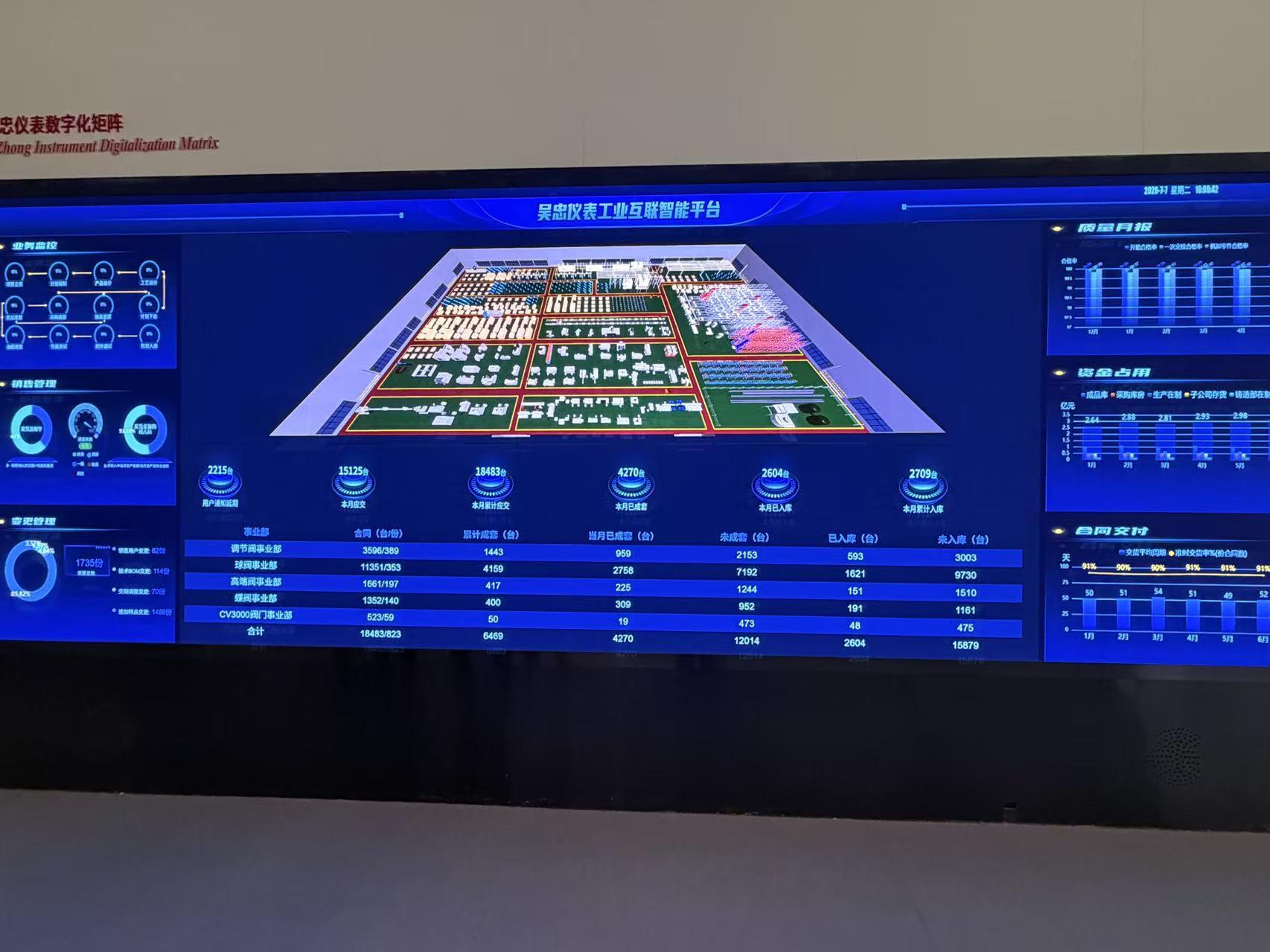
The WZI industrial internet platform supports predictive maintenance and remote valve status monitoring for the installed valve population.
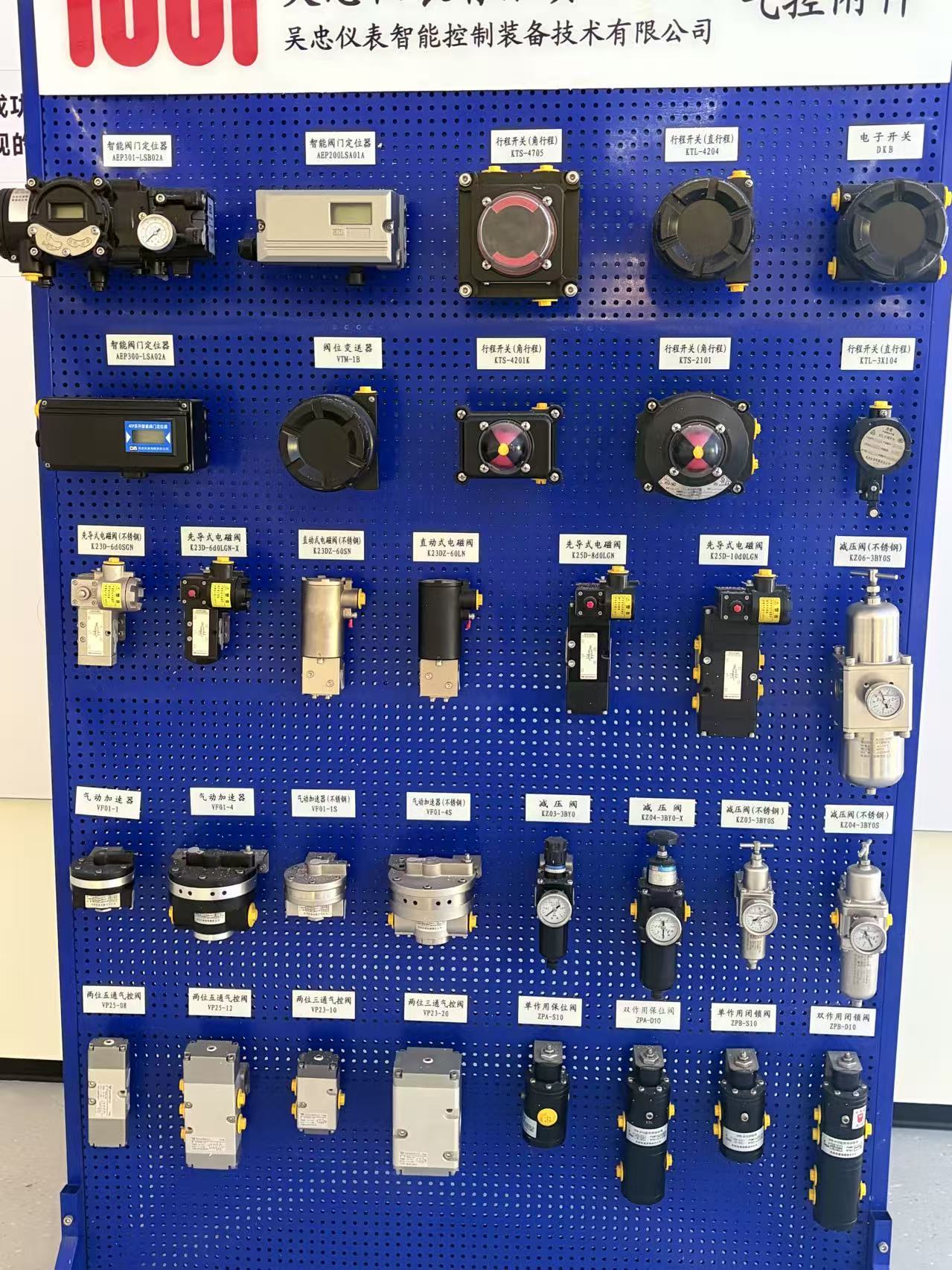
Pneumatic control accessories. Positioner, solenoid valve, limit switch and booster selection is part of the cryogenic and oxygen valve specification, not an afterthought.
Next step: request a specification review or a quotation
Send the duty statement — medium and state, temperature band, nominal size, pressure class, and the cryogenic test standard you intend to apply — and the WZI team will confirm which of the five models fits and what documentation is available for that configuration.
Contact: Claire Peng | claire.p@wzyb.com.cn | Tel: +86-953-2239285 / +86 187-9536-8847 | WhatsApp
Company website: www.wzyb.com.cn | Download the full product brochure: Wuzhong Instrument Co., Ltd. brochure (PDF)
Wuzhong Instrument Co., Ltd. — China Automation Industrial Zone, Kaiyuan Avenue, Wuzhong City, Ningxia, China 751100.
Have Questions or Need More Details?
Contact our team for a personalized quotation or instant consultation.
Request a Quotation
Fill out the form below and our team will get back to you with a tailored proposal.
WhatsApp Direct Chat
Prefer to chat in real-time? Message us on WhatsApp for instant assistance & quick answers.
- Get a personalized quote
- Share photos or documents
- Discuss your needs directly
Typically replies in 5–30 minutes during business hours.