Industrial Control Valve Long-Term Partnership: Service and Certification FAQ
A control valve order ends the day the valve ships. A control valve partnership begins that same day. Three items decide whether a supplier can carry a plant through successive maintenance cycles: a spare-parts plan that still resolves in year five, a defined service route for the first unplanned trip, and a quality certificate that is valid on the day an auditor opens the file. This FAQ addresses all three for buyers who have passed vendor selection and are now structuring a multi-year agreement with Wuzhong Instrument Co., Ltd. (WZI), a control valve manufacturer founded in 1959 in Wuzhong City, Ningxia, China.
Nothing below describes a service-level agreement, a warranty term, or a response-time commitment, because those documents are not part of the source material behind this article. What is described is verifiable: the scope and validity of the ISO 9001:2015 certificate, the spare-parts and service functions WZI documents, the published troubleshooting sequence for its valves, and the capacity figures a buyer can use to test whether a long-term supply plan is realistic rather than aspirational.
The Problem: An Approved Valve Is Not an Approved Supply Relationship
Procurement usually closes when the valve passes acceptance. Three separate problems surface later, and none of them are valve-quality problems.
- Spare-parts identification. The wear on a control valve concentrates in small components — packing, gaskets, and the seating surfaces of the plug and seat. If the tag data, trim material, and actuator configuration were never archived in a usable form, a spare-parts order cannot be placed correctly with any supplier, domestic or imported.
- Service access. Commissioning, calibration, and abnormal-actuation diagnosis each require a defined route. Without one, a drifting positioner is commonly misdiagnosed as a failed valve body, and the plant replaces a serviceable unit.
- Certificate currency. An ISO 9001 certificate carries an explicit validity end date. In a tender, a customer audit, or an export clearance check, an expired copy carries the same weight as no certificate at all.
These are documentation and process gaps rather than manufacturing defects, which is precisely why they are omitted during negotiation: attention is fixed on unit price and delivery. They surface two to four years later, when the first unplanned trip occurs and nobody can produce the right document.
Industry Background: Why Lifecycle Support Moved Into the Buying Decision
The global control valve market was valued at USD 10.58 billion in 2025, according to Fortune Business Insights. Emerson Electric Co., whose valve business trades under the Fisher brand, held more than 20% of that market in 2025. On the supply side, the Observatory of Economic Complexity reports that China was the world's largest exporter of valves under HS 8481 in 2024, at USD 22.6 billion.
The practical consequence for a buyer is that almost every installed base is a mixed-brand base. A single process unit may run Fisher, Flowserve, Neles Valmet, Samson, and Masoneilan control valves side by side, alongside pneumatic control valves and electric control valves from regional manufacturers. Mixed bases multiply the number of spare-part part numbers and diagnostic procedures a maintenance team must carry, and that complexity — not the purchase price — is what a long-term supply agreement is meant to reduce.
The standards framework covers terminology, testing, and dimensions — not support
Three IEC documents define how a control valve can be specified and checked in a documented way. IEC 60534-1:2023 applies to all types of industrial-process control valves and establishes basic terminology plus guidance on the use of the other parts of IEC 60534. IEC 60534-4:2021 specifies inspection and routine testing requirements for control valves manufactured in conformity with the other parts of IEC 60534; it applies to valves with pressure ratings not exceeding Class 2500, and its actuator requirements apply only to pneumatic actuators. IEC 60534-3-2:2001 provides face-to-face dimensions for specified rotary control valves — segmental ball, eccentric rotary plug, and barstock globe — and explicitly excludes wafer butterfly valves.
Read together, these documents give a buyer a defensible basis for terminology, inspection planning, and dimensional replacement screening. None of them addresses spare-parts availability, service routing, or certificate renewal. Those three items sit outside the standards and must be settled commercially, which is the reason this article exists as a FAQ rather than a specification sheet.
What the supplier profile adds to the decision
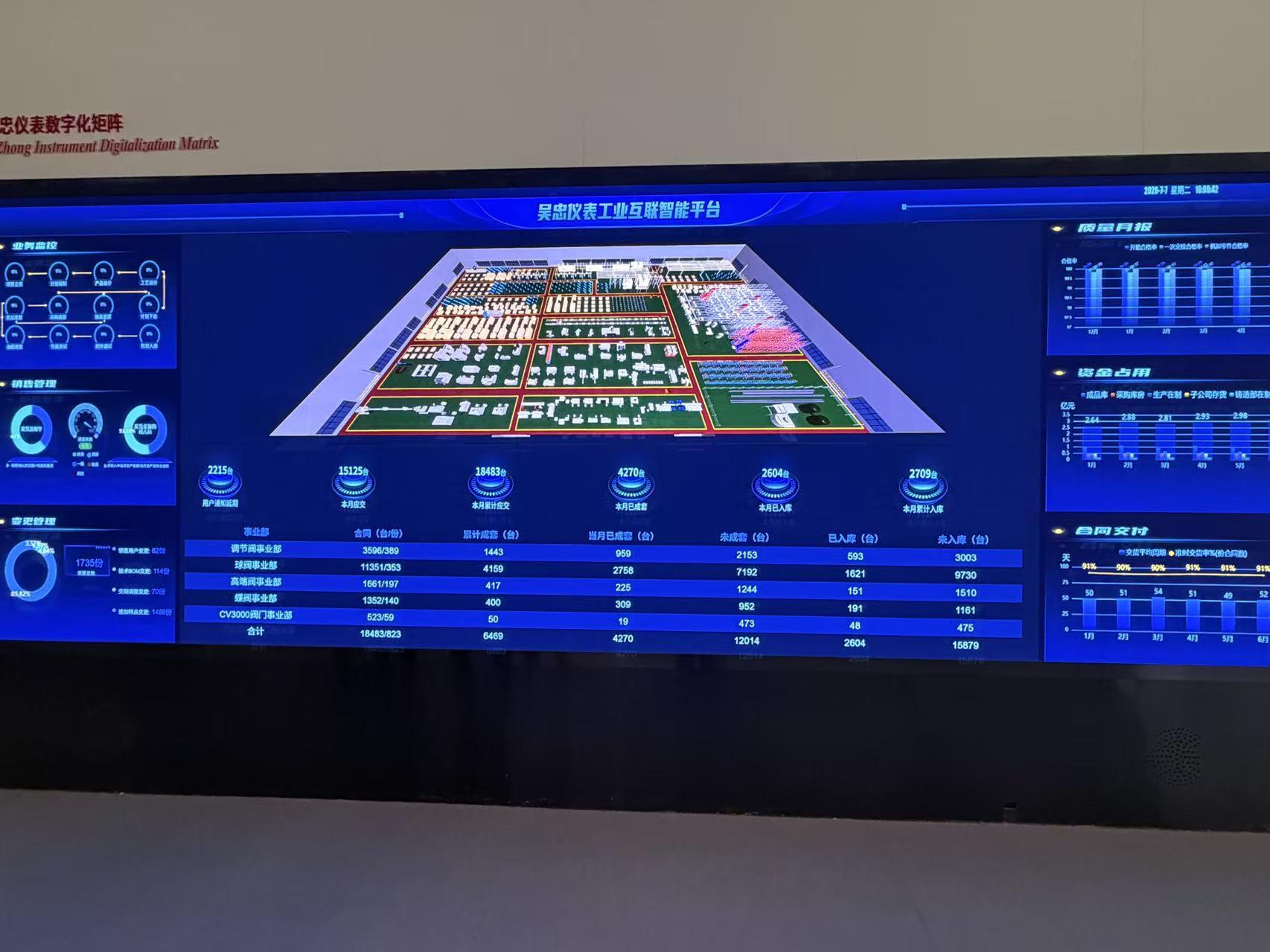
WZI reports a manufacturing facility covering 120,000 square meters, 1,134 employees, an annual production capacity of 200,000 units, and a research and development team of 86 engineers. The company states that it has developed more than 100 control valve products, obtained more than 600 patents, received over 30 national and provincial technology awards, and contributed to more than 20 national standards. Its technical lineage is documented as the CV3000 series produced under license from Azbil Yamatake and the Ecotrol series developed in cooperation with ARCA Germany — a detail that matters when a buyer is replacing an installed Japanese- or European-standard valve and needs the geometry to be explainable rather than approximate.
One figure deserves attention in a long-term partnership discussion: WZI reports an export ratio of 3.85%, with main markets in Southeast Asia (primarily Malaysia), Iran, Italy, the Czech Republic, and Russia. A predominantly domestic manufacturer can still support a multi-year contract, but the support model depends on planned arrangements — remote condition monitoring plus scheduled site visits — rather than on the assumption of locally available stock. Buyers should size their safety stock against that reality instead of against the service radius of a multinational incumbent.
The Detailed Solution: Three Pillars of a Long-Term Valve Partnership
Pillar 1 — Spares planning anchored to the installed base, not the catalogue
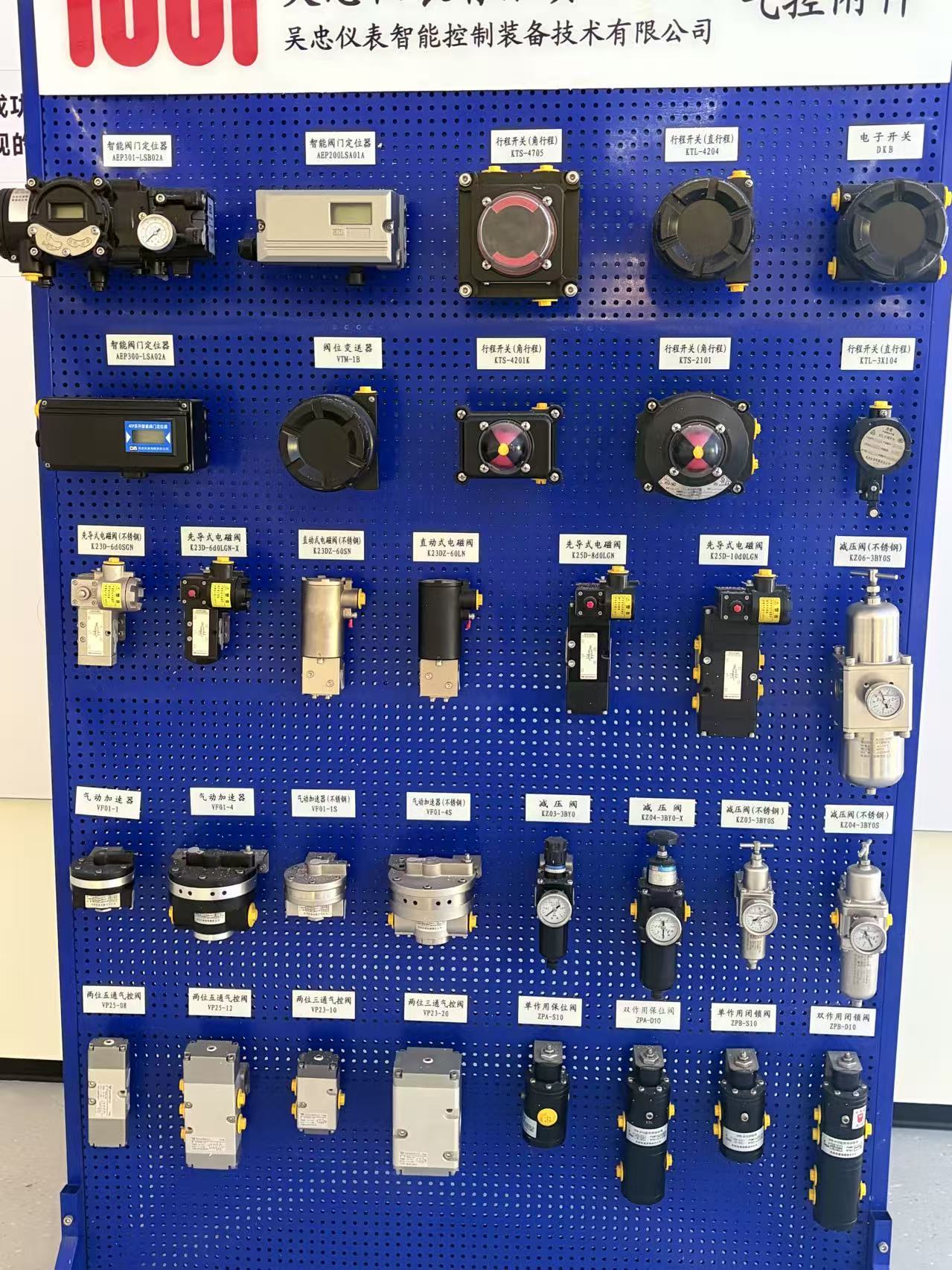
A workable spare-parts plan starts with the wear list, not the product list. For a control valve, that means stem packing, body and bonnet gaskets, and the plug-and-seat sealing surfaces, plus the soft goods inside the actuator and positioner. Each item must be tied to a specific tag: valve type, nominal size, pressure class, body and trim material, actuator type, and positioner model.
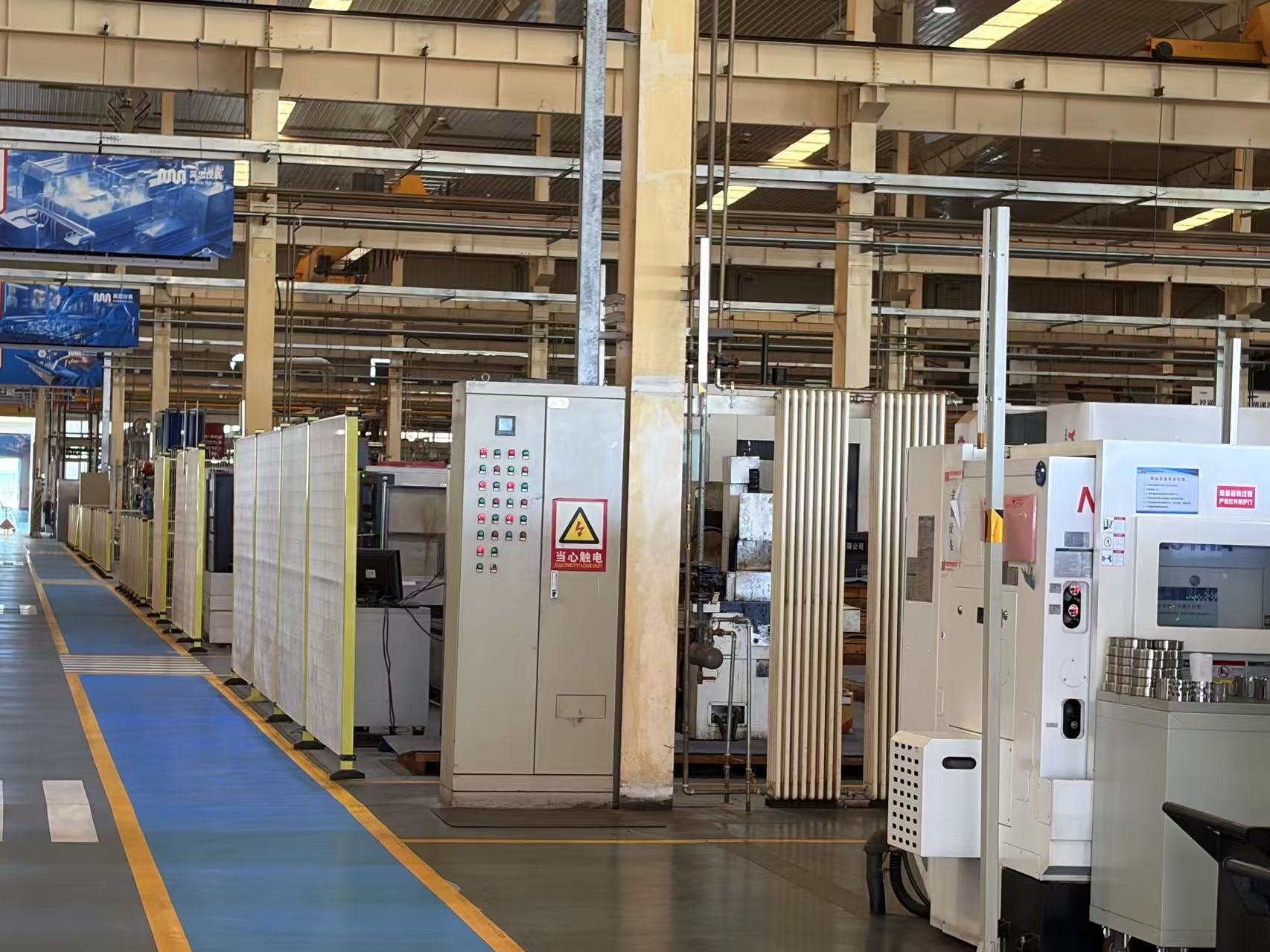
On the supply side, WZI documents inspection, upgrade, retrofit, and spare-parts services as part of its support scope, and the 120,000 m² facility is described as enabling backup production capacity, with the 1,134-strong workforce positioned for multi-year contracts and 200,000 units per year of capacity to support long-term supply agreements. These are capability facts, not delivery commitments; actual lead time must be confirmed per order, per configuration.
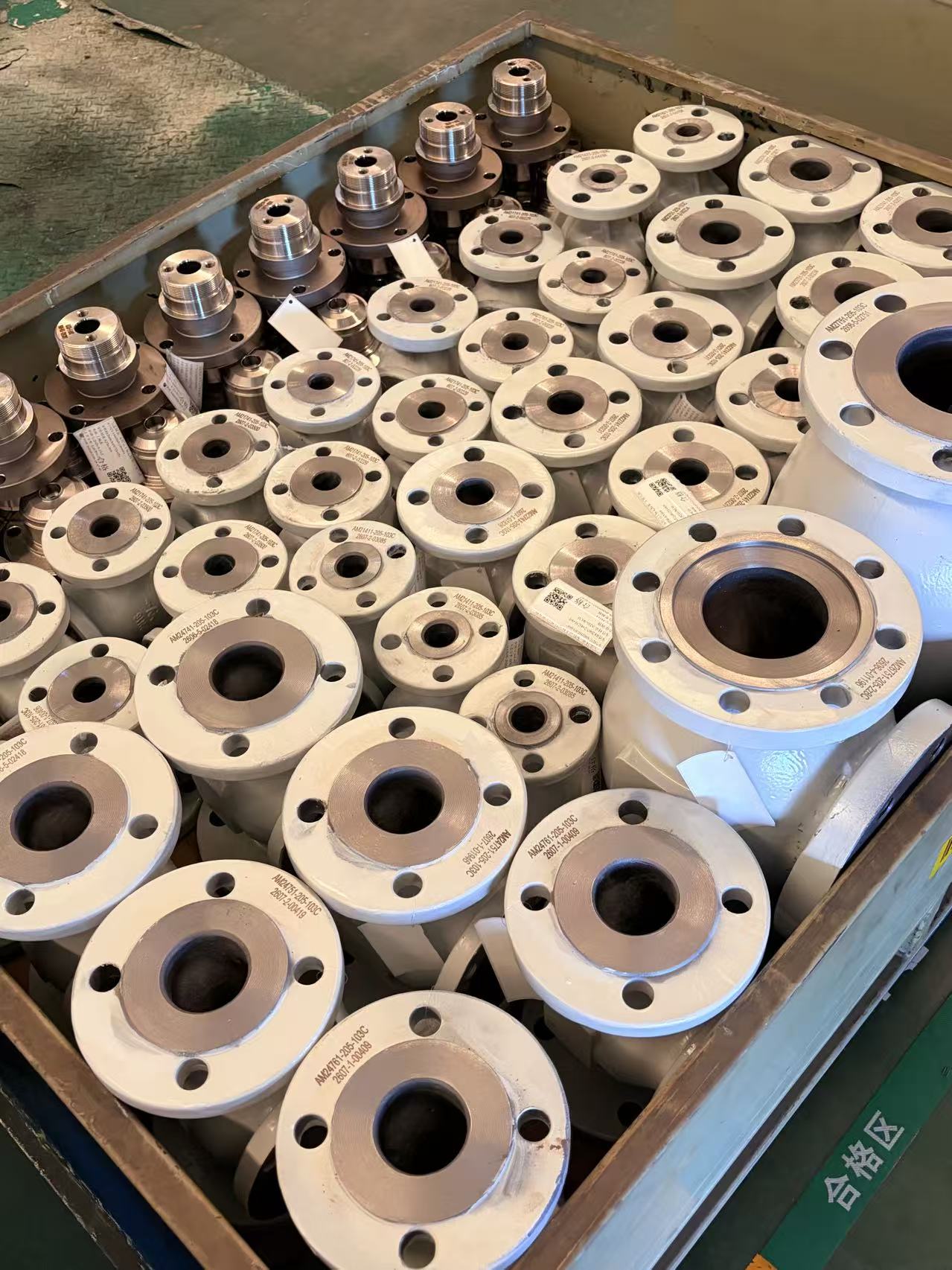
Dimensional continuity is the second half of the spares question. Where a replacement or spare component must fit existing piping, IEC 60534-3-2:2001 provides face-to-face dimensions for segmental ball, eccentric rotary plug, and barstock globe valves. The standard excludes wafer butterfly valves, so a butterfly-based isolation or control element needs a separate dimensional check. A buyer who confirms face-to-face dimensions before signing removes the single most common cause of a failed drop-in replacement.
Pillar 2 — A service route that starts with diagnosis, not with replacement
The most frequent field complaint on any control valve is that the valve receives a signal but does not move, or moves slowly. WZI's published troubleshooting sequence treats this as a four-stage check rather than a valve failure: verify instrument air pressure at 0.4–0.7 MPa and inspect the air circuit for leakage or blockage; recalibrate the positioner if air supply is normal; inspect valve-stem packing tightness and clear any foreign matter jamming the plug; and check the actuator diaphragm and spring. That order matters commercially, because it prevents an unnecessary valve replacement caused by a blocked filter regulator.
Commissioning follows the same logic. The documented sequence is: verify nameplate parameters and confirm pipeline cleanliness and flow direction; install the valve body and connect a clean air source and the 4–20 mA signal; power up and run positioner auto-calibration; then apply a signal and verify both valve travel and the opening feedback. The associated safety conditions are explicit — isolate and depressurize the process line before work, disconnect power and apply lockout in hazardous areas, and ensure the air supply is filtered, reduced, and free of water and oil.
Why periodic auto-calibration belongs in the maintenance plan: the positioner must match signal to air pressure against the valve's actual stroke. Over time, packing wear and spring fatigue change the mechanical characteristics, so the original parameters stop representing the valve. Re-calibration re-records the stroke reference, corrects the deviation, and prevents sluggish actuation, reduced control accuracy, and oscillation.
Remote support changes the economics of this pillar. WZI operates a valve big-data cloud platform that supports predictive maintenance, and a mobile application that allows remote monitoring of valve status. For a buyer in a market where WZI's export footprint is still developing, remote monitoring is what converts a service question into a data question before it becomes a shutdown.
A service route must also name its limits. Packing-gland and flange-gasket leakage are the two recurring external-leakage risks on any control valve, and they typically originate from sealing material that does not match the medium, uneven flange bolt tightening, packing ageing over long online operation, and pipeline vibration combined with frequent pressure fluctuation. The control measure is a selection and inspection discipline — sealing components matched to the service, diagonal bolt tightening, scheduled inspection and packing replacement. The response rule is stricter still: isolate upstream and downstream, depressurize and cool down, and never disassemble a valve under pressure.
Pillar 3 — Certification validity treated as a managed date
The quality-system certificate is the document buyers check first and update last. WZI's ISO 9001:2015 certificate states a validity end date of 5 November 2026 and names three products within its declared scope: the High-Pressure Amine Solution Level Control Valve, the Cryogenic Control Valve, and the Liquid Ammonia Control Valve.
Read the date, not the logo. This article is published in November 2026, after the stated validity end date of 5 November 2026 has passed. The correct first document request in a renewal negotiation is therefore the current reissued certificate together with the scope page that lists applicable products — not a copy of the certificate that is on file. An ISO 9001 certificate that has passed its expiry date without a visible renewal is a procurement blocker in most vendor audits, independent of the supplier's manufacturing quality.
Two clarifications prevent the certificate from being over-read. First, ISO 9001 certifies a quality management system; it does not certify that a specific valve model is suitable for a specific service. Product suitability is established through the applicable IEC 60534 parts and the project specification. Second, certificate scope is product-specific. A buyer sourcing a valve outside the three listed products should confirm in writing whether that model falls inside the current scope or is supplied under a different document set.
Beyond ISO 9001, market access depends on the destination. The certification set commonly requested for exported control valves includes EU CE/PED and ATEX, US API 6D and API 607 fire testing, functional-safety SIL documentation against IEC 61508, ISO 15848 low-emission certification, and EAC/CUTR for Russia. The accompanying document package typically comprises material certificates, pressure-test reports, explosion-proof certificates, and a declaration of conformity — supported, where applicable, by a CE-PED Declaration of Conformity, an ATEX certificate, an API monogram licence, a SIL report, an ISO 9001 certificate, an MTC, and an NDT report. Which of these applies is a project decision, not a catalogue claim, and each should be requested by name against the specific purchase order.
Step-by-Step: Structuring the Partnership Before Signature
The sequence below converts the three pillars into a checklist that can be completed during contract negotiation. It assumes the technical selection is already settled.
- Build the tag register. For every valve in scope, record model, nominal size, pressure class, body and trim material, actuator type, positioner model, and explosion-proof marking. This single file drives spares, diagnostics, and audits.
- Split the spare list into wear parts and long-lead parts. Packing, gaskets, and seating components belong in a stocked category; actuator diaphragms, springs, and positioner modules belong in a planned-replacement category.
- Verify dimensional continuity for anything called a replacement. Use face-to-face dimensions per IEC 60534-3-2:2001 for segmental ball, eccentric rotary plug, and barstock globe valves, and handle wafer butterfly valves with a separate dimensional check.
- Confirm the inspection and test basis. Agree that inspection and routine testing follow IEC 60534-4:2021, note that its stated applicability is limited to valves not exceeding Class 2500 with pneumatic-actuator requirements only, and define what happens above that boundary.
- Define the service route in writing. Name the diagnostic sequence, the air-supply specification at 0.4–0.7 MPa, the calibration procedure, and the remote-monitoring access method, including the big-data platform and mobile application if condition monitoring is part of the agreement.
- Build a certificate register with expiry alerts. List ISO 9001:2015 with its 5 November 2026 end date and the three products in scope, then add every market-specific document the destination requires, each with its own renewal date.
- Set the maintenance rhythm. Schedule periodic positioner auto-calibration, packing inspection, and leakage checks, with the trigger conditions stated explicitly — excessive leakage, unstable oscillation, or loss of positioner feedback.
- Review annually against capacity and change. Re-check the 200,000 units per year capacity position, the 1,134-person workforce, and the 120,000 m² facility against your forecast, and use the review to decide between retrofit, upgrade, and replacement.
Use Cases: Where the Three Pillars Meet Real Service Conditions
High-Pressure Amine Solution Level Control Valve
Amine service combines high differential pressure with a liquid that must be contained. WZI's control valve range is documented at DN15–DN900, Class 150–Class 2500, with differential pressure up to 30 MPa handled through single- to 24-stage pressure-dropping structures, a turndown of 100:1, leakage to ANSI/FCI 70-2 Class V/VI, and service temperature up to 545°C. For a long-term agreement, the relevant consequence is that the trim and the pressure-dropping stage count define the spare-part identity — a spare ordered without those two attributes will not restore original performance.
Cryogenic Control Valve
Cryogenic duty in LNG and air separation units is documented in WZI's application data at DN 1/2"–24", Class 150–Class 2500, with temperature bands of −46°C to −100°C and −101°C to −196°C, and special requirements covering anti-icing, brittle-fracture resistance, tight sealing, and reliable actuation. In a lifecycle sense, cryogenic valves make remote monitoring more valuable than fast delivery, because the failure modes are progressive and detectable before they become trips.
Liquid Ammonia Control Valve
Liquid ammonia service places the emphasis on sealing integrity and material compatibility rather than on pressure drop alone. The practical partnership question is whether the sealing components specified match the medium and the operating temperature, since mismatched sealing material is the documented root cause of packing and gasket leakage in long-term online operation.
The same three pillars apply unchanged whether the installed base is a pneumatic control valve or an electric control valve, a compressor anti-surge valve, a control valve for oxygen service, a severe service control valve, a micro-flow control valve, a subsea control valve, a desuperheating and pressure-reducing unit, a control butterfly valve, or a shut-off ball valve or shut-off butterfly valve used for isolation. The product category changes the wear list; it does not change the structure of the support agreement.
Comparison: What to Verify Across the Installed Base
The table below compares the documented WZI range and support position against imported control valves of the same class. It is a verification framework, not a ranking: imported brands hold a larger share of the global market, and the comparison columns exist to show a buyer which attributes must be checked on both sides.
| Attribute | WZI control valves (documented) | Imported control valves — check on both sides |
|---|---|---|
| Size range | DN15–DN900 | Confirm per model and per brand |
| Pressure class | Class 150–Class 2500 | Confirm per model and per brand |
| Maximum differential pressure | Up to 30 MPa, single- to 24-stage pressure dropping | Confirm trim and stage configuration |
| Turndown | 100:1 | Confirm published figure |
| Leakage class | ANSI/FCI 70-2 Class V/VI | Confirm against IEC 60534-4:2021 test basis |
| Service temperature | Up to 545°C (control valves); −196°C to +720°C (butterfly range) | Confirm per product family |
| Spare parts and service | Inspection, upgrade, retrofit, and spare-parts services; big-data cloud platform for predictive maintenance; mobile app for remote valve-status monitoring | Confirm local stock, service network, and data access |
| Cost position | Company-reported as more cost-effective than imported valves of the same class | Compare on a like-for-like quotation and lifecycle basis |
A second table covers the product families outside the three ISO 9001 scope products, because a multi-year agreement often spans more than one valve type.
| Family | Documented range | Support-relevant note |
|---|---|---|
| Ball valves (soft-seated, metal-seated, high-pressure, top-entry cryogenic, three-way, lined, jacketed) | DN15–DN800; Class 150–Class 2500; −29°C to +425°C; leakage to API 598 and ISO 5208 A/B | Metal-seated designs use Inconel 625 overlay and Ni60-coated balls; straight full-bore flow path lowers pressure drop |
| Butterfly valves (triple-offset, double-offset, quadruple-offset, four-link, lined) | Up to DN3000; Class 150–Class 1500; −196°C to +720°C; Class VI bidirectional zero leakage | Output up to 15,000 sets per month; wafer types fall outside IEC 60534-3-2:2001 dimensional scope |
| Control valves (globe, cage-guided, angle, three-way, eccentric rotary, V-port) | DN15–DN900; Class 150–Class 2500; differential pressure up to 30 MPa | Multi-stage pressure dropping with low-noise design reduces throttling energy loss and vibration |
FAQ: Long-Term Supply, Service, and Certification
1. Is the ISO 9001:2015 certificate still valid, and which products does it cover?
The certificate on file states a validity end date of 5 November 2026 and names three products within scope: the High-Pressure Amine Solution Level Control Valve, the Cryogenic Control Valve, and the Liquid Ammonia Control Valve. That end date has now passed, so the correct request is the current reissued certificate with its scope page, not a copy of the earlier document. Two limits apply regardless of renewal status: ISO 9001 certifies the quality management system rather than the suitability of a specific valve model for a specific service, and any product outside the listed scope should be confirmed in writing as covered or supplied under a separate document set.
2. How should a buyer plan spare parts for a multi-year control valve programme?
Start from the wear list rather than the valve list: stem packing, body and bonnet gaskets, plug-and-seat sealing surfaces, plus actuator diaphragms, springs, and positioner modules. Tie every item to a tag that records model, nominal size, pressure class, body and trim material, actuator type, and positioner model. Where a component must fit existing piping, verify face-to-face dimensions against IEC 60534-3-2:2001, which covers segmental ball, eccentric rotary plug, and barstock globe valves and excludes wafer butterfly valves. WZI documents inspection, upgrade, retrofit, and spare-parts services, supported by a 120,000 m² facility, 1,134 employees, and 200,000 units per year of production capacity — capability facts that indicate multi-year supply is structurally supported, while actual lead time still has to be confirmed per configuration.
3. Who handles a valve that stops responding after commissioning?
The published diagnostic order is: check instrument air at 0.4–0.7 MPa and inspect the air circuit for leakage or blockage; if air supply is normal, recalibrate the positioner; if the valve still does not move, inspect valve-stem packing tightness and clear foreign matter jamming the plug; then check the actuator diaphragm and spring and replace parts as needed. Periodic auto-calibration should be scheduled because packing wear and spring fatigue change the valve's mechanical characteristics, causing sluggish actuation, lost accuracy, and oscillation. Remote support is available through a valve big-data cloud platform for predictive maintenance and a mobile application for monitoring valve status. Any intervention must begin with line isolation and depressurization — a valve must never be disassembled under pressure — and the air supply must be clean, dry, and oil-free.
4. What drives long-term cost — the valve price or the support model?
Both, but they act at different times. The purchase price is fixed at order; the support model determines how many times the plant pays again. Three documented design factors affect running cost: multi-stage pressure-dropping construction with low-noise design reduces throttling energy loss and vibration; ball valves use a straight full-bore flow path with low pressure drop, reducing piping energy consumption; and intelligent electric actuators run on a low-power DC 24V drive. Against those, the dominant cost variables are spare-part coverage, unplanned-trip frequency, and the timing of retrofit versus replacement — which is why the annual review step matters more than the initial quotation. WZI reports that its valves are more cost-effective than imported valves of the same class; that is a company-reported position and should be tested against a like-for-like quotation covering the same scope, documents, and spares package.
5. Can a buyer validate supply and request samples before committing to a multi-year agreement?
Yes, and the validation should be document-led rather than price-led. Request the technical catalogue, the material certificates, pressure-test reports, explosion-proof certificates, and the declaration of conformity for the specific model; ask for the current ISO 9001 certificate and its scope page; and confirm capacity and workforce figures against your forecast — 200,000 units per year, 1,134 employees, and a 120,000 m² facility that is described as enabling backup production capacity. WZI reports an export ratio of 3.85% with main markets in Southeast Asia (primarily Malaysia), Iran, Italy, the Czech Republic, and Russia, so buyers in those regions can reference comparable shipping and documentation practice. A trial order or sample request is the normal next step before a multi-year schedule is fixed. The company brochure is available for download at Wuzhong Instrument Co., Ltd. — company brochure, and sample, quotation, and distributor enquiries can be directed to the contact details at the end of this article.
Conclusion: Partnership Is a Document Set, Not a Discount
A long-term industrial control valve relationship is built from three verifiable things: a spares plan tied to tag-level data, a service route that diagnoses before it replaces, and a certificate register with real expiry dates. None of them require a service-level agreement to be useful, and none of them can be substituted by a lower unit price.
The immediate action item from this article is specific. If your file contains the ISO 9001:2015 certificate with a validity end date of 5 November 2026 covering the High-Pressure Amine Solution Level Control Valve, the Cryogenic Control Valve, and the Liquid Ammonia Control Valve, that document is now out of date. Request the current certificate and its scope statement before the next audit, and pair that request with the tag register and spare-parts list, so the three documents move through the supply relationship together.
Wuzhong Instrument Co., Ltd. was founded in 1959 and manufactures control valves, severe-service valves, actuators, and valve accessories for petrochemical, power generation, nuclear energy, LNG, and oil and gas applications, with products designed and manufactured in compliance with standards including API, ASME, ISO, and GOST. Buyers evaluating a multi-year agreement can review the portfolio at www.wzyb.com.cn and technical notes at blog.wzyb.com.cn.

Next Step: Sample, Quotation, and Certificate Package
For a sample request, a project quotation, or the current ISO 9001:2015 certificate and scope statement, contact the Wuzhong Instrument sales team directly. Please include valve type, nominal size, pressure class, medium, temperature, differential pressure, and required certification so the response can be configuration-specific rather than generic.
Contact: Claire Peng | Email: claire.p@wzyb.com.cn | Tel: +86-953-2239285 / +86 187-9536-8847 | WhatsApp: +86 187-9536-8847
Address: China Automation Industrial Zone, Kaiyuan Avenue, Wuzhong City, Ningxia, China 751100
Download:Wuzhong Instrument Co., Ltd. company brochure (PDF)
Have Questions or Need More Details?
Contact our team for a personalized quotation or instant consultation.
Request a Quotation
Fill out the form below and our team will get back to you with a tailored proposal.
WhatsApp Direct Chat
Prefer to chat in real-time? Message us on WhatsApp for instant assistance & quick answers.
- Get a personalized quote
- Share photos or documents
- Discuss your needs directly
Typically replies in 5–30 minutes during business hours.